Home / Bo

Bo
Bo does not just count what it can see. It asks the missing piece — ranch or vinaigrette? side of rice? — so the salad you logged is not off by 400 calories.
Home / Bo
Bo does not just count what it can see. It asks the missing piece — ranch or vinaigrette? side of rice? — so the salad you logged is not off by 400 calories.
Six seconds end to end. Bo asks the single thing a photo cannot show, which is usually where the calories are hiding.
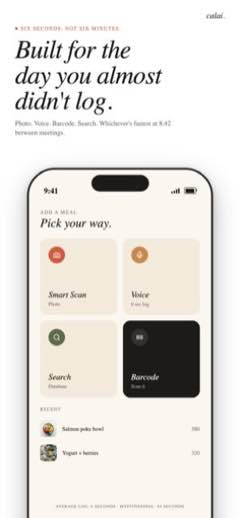
Snap the plate or just say what you ate. Both land in the same log with macros attached.
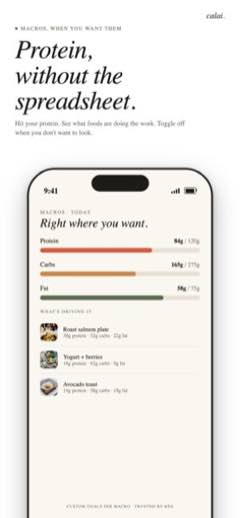
Protein, carbs and fat tracked per meal and per day, because the number on its own rarely tells you enough.
When Bo is not sure, it says so instead of inventing a confident number. That is the whole point.
Three steps, no account needed to try it.
Photograph the meal before you eat it, at an angle rather than straight down so depth is visible.
Dressing? Oil? Side of rice? The one thing a photo cannot show is where most of the error lives.
Calories and macros, with Bo saying so when it is not certain rather than inventing confidence.
The honest AI calorie counter.
ScrollThe things people ask most often before downloading.
Independent testing in 2026 found popular AI food apps underestimated calories and fat by roughly a third on prepared meals, largely because a photo cannot show oil, dressing or hidden ingredients. Bo asks one targeted follow-up question about exactly those things, which is the single highest-leverage fix available. No photo-based estimate is exact — treat any of them as a good estimate, not a lab measurement.
Yes, Bo is free to download on the App Store. It requires iOS 17 or later.
Yes. Voice logging is built in, which is usually faster for meals that are awkward to photograph, like a handful of nuts or a drink.
Yes. Every logged meal carries protein, carbohydrate and fat, and the day view totals them alongside calories.
Because the largest source of error in photo calorie counting is invisible: cooking oil, dressing, butter, and sides hidden under other food. One question resolves most of that gap, which is why Bo asks it instead of guessing.
Researched answers to what people search in this space. No download required to read them.
Testing found popular AI calorie apps underestimate meals by around a third. Here is where the error comes from, and the three habits that close most of the gap.
2 min read
Most adults need 1,600 to 3,000 calories a day depending on age, size and activity. How to estimate your number, and the minimums you should not go below.
2 min read
Five habits that improve AI calorie estimates by 10 to 15 points: size references, separating components, shooting at an angle, and correcting what you know.
2 min read
Usually the deficit is smaller than you think — intake is underestimated by 12–40% on average. Plus water retention and metabolic adaptation. How to tell which.
2 min read
Macros are protein, carbohydrate and fat. How to set your targets, why protein is the one worth hitting, and how to track without it taking over your day.
2 min read
For most adults, yes — it creates a 700–900 calorie deficit for an average woman, far beyond the 300–500 evidence supports. When it is appropriate.
2 min read
For preserving or building muscle: 1.6–2.2 g per kg of body weight daily. Why the top of that range matters when cutting, and how to hit it easily.
2 min read
Your maintenance is the intake at which weight holds steady. Calculators give an estimate; two weeks of honest logging gives the real number. How to find and use it.
2 min read
Instagram’s built-in browser won’t hand off to the App Store.
Tap ⋯ at the top-right, then Open in browser.